For new projects & collaboration opportunities:
Say Hello
For insights & ideas:
Sign up for our newsletter
For good vibes:
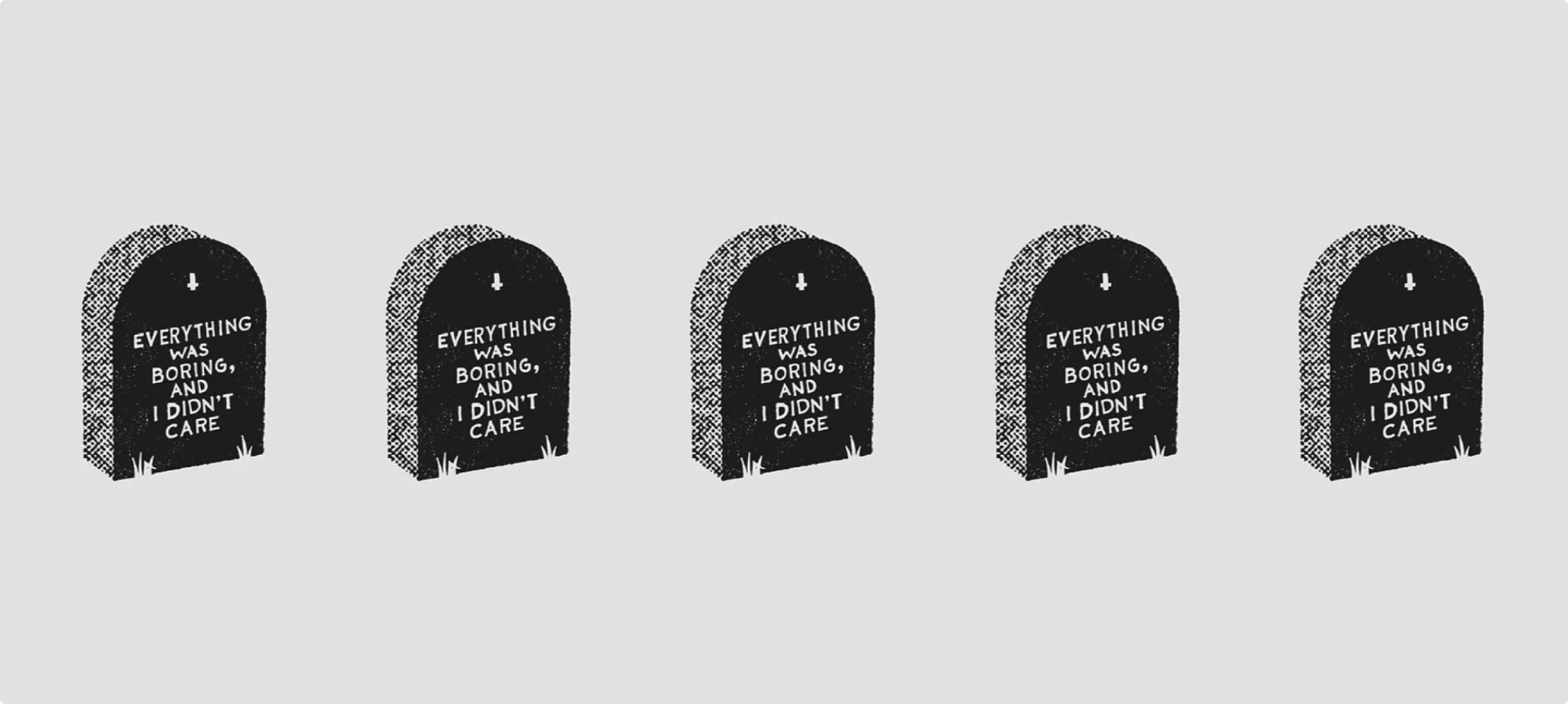
Schadenfreude.
Leave it to the Germans, linguistic engineers of bangers like Doppelgänger and Kindergarten, to give us the perfect word for the sickly-sweet fascination of second-hand embarrassment. You might not know the word, but you know the feeling if you’ve ever binge-listened to riches-to-rags stories about people like Elizabeth Holmes or witnessed Australia’s Olympic breakdancer meme herself into early retirement.
Why can’t we look away from these situations?
Failure might be universal, but its consequences are always personal—relational.
We’re fascinated by the revelation that people aren’t who they claim, or that there’s a gap between what they say and what they do, but we’re simultaneously terrified that we’ve misjudged that distance in our own lives.
That’s a lot of pre-amble (pre-ramble?) for a blog post about Amenable’s own professional shortcomings, but it’s important to dispense with the “failure is good, actually” framework so that we can get at something deeper—how failure brings clarity to priorities in our relationships. Naturally, we’ll be doing so through the power of alliteration, looking at three specific examples of missteps we’ve made.
It’s painful to admit it, but sometimes the dream client ends up being a nightmare. Our work centers on communications, so miscommunication is part of the territory, but it can be irreconcilable.
A few years ago, we took a couple meetings with a prospective client. On paper, their project would have been an exceptional addition to our portfolio. In practice, though, it was anything but.
In our conversations, the client dodged our questions, mocked our staff, and waxed poetic about how we couldn’t understand them because they had created “over a dozen successful businesses” and serendipitously been involved in the founding of Google and Under Armour and also “managed” Coca-Cola.
It was a privilege for us to be in their presence.
Anybody with internet access could prove that the client’s self-mythology was entirely invented, but it never feels good to call someone a liar, particularly when a project is on the line. We tried to accommodate the client’s fantasy and fruitlessly emailed back and forth before finally calling it quits, but that “customer is always right” mindset hung over us and we felt bad that we couldn’t make it work.
In hindsight, though, we were treating the scaffolding of the relationship as more important than its foundation—honesty. We blew it because we didn’t have the self-respect to immediately hold the client accountable, and the end result was a lot of wasted time and implicit validation of their grandiosity.

We’ve had some truly exceptional people work for Amenable, but there are times we have failed to recognize them.
Before we were called Amenable (real ones know), we proudly touted our non-hierarchical structure and the idea that everybody holds an equal amount of authority. It’s another concept that sounds great on paper, but it doesn’t reflect how people actually are.
Without anybody to answer to, team members subtly redefined their roles, prioritizing projects that interested them and working on their own schedule. Our wonderful project manager became increasingly burnt out as their job shifted to damage control. Their countless reminders about tasks with impending or expired deadlines weren’t taken seriously, and they ultimately felt disrespected in their work.
Our leadership team felt terrible, but it was a fair critique. We failed because the language of equality was a lot easier than the lifestyle of respect. It was more comfortable to project an image of harmony than to practice a rhythm of accountability. In recent years, Amenable has switched to a more traditional leadership structure, but those early mistakes still sting.

It’s arguably the least personally important of these three categories, but our brand-related failures somehow feel the hardest to acknowledge. Perhaps it’s a testament to the significance of a brand, or maybe it’s just easier to accept miscommunication than misjudged communication.
Amenable celebrated its third birthday this year, and while our youth offers us a light-footed ability to adapt, it also means we’ve spent a lot of time figuring out our brand in the public eye. If you scroll through the entirety of our Instagram feed, you’ll see what I mean—we have our stock photos and articles era, our cute illustration era, and our Work-From-Home Wednesday era. It’s a lot.
Similarly, we’re frequently re-evaluating our content priorities and how we market our services, and it can all start to feel a little muddled. It’s easy to blur the line between interiority and insularity, and the distance between stagnation and instability isn’t always clear.
Are we communicating for us or for our clients? Is Amenable for us or for others?
The correct answer is “both,” but putting that in action is easier said than done.
When people don’t respond to how we present ourselves, it feels embarrassing, but if we cater too much to an imaginary audience, we don’t attract the clients we are excited about helping. Do we build the relationships within our reach or pursue the ones we want?
This is the challenge for every organization, and it’s one we’re passionate about helping people navigate. It’s much easier as outsiders looking in, but if we ever have the privilege of working with you, know that we understand how close to the heart all of this really is.
“By understanding why failure stings so much, maybe you’ll better understand how to help the people you care about.”
If you don’t recall the title of this piece, I’ll save you the work of scrolling back to the top—“Failing Onwards.” Failing upwards isn’t the goal, but moving forward is. It’s important to not romanticize mistakes or assume that they somehow serve you by default, but they can illuminate the values that animate your relationships. By understanding why failure stings so much, maybe you’ll better understand how to help the people you care about.
What are your most formative failure stories? If you have any funny or thought-provoking ones, we’d love to hear them!
